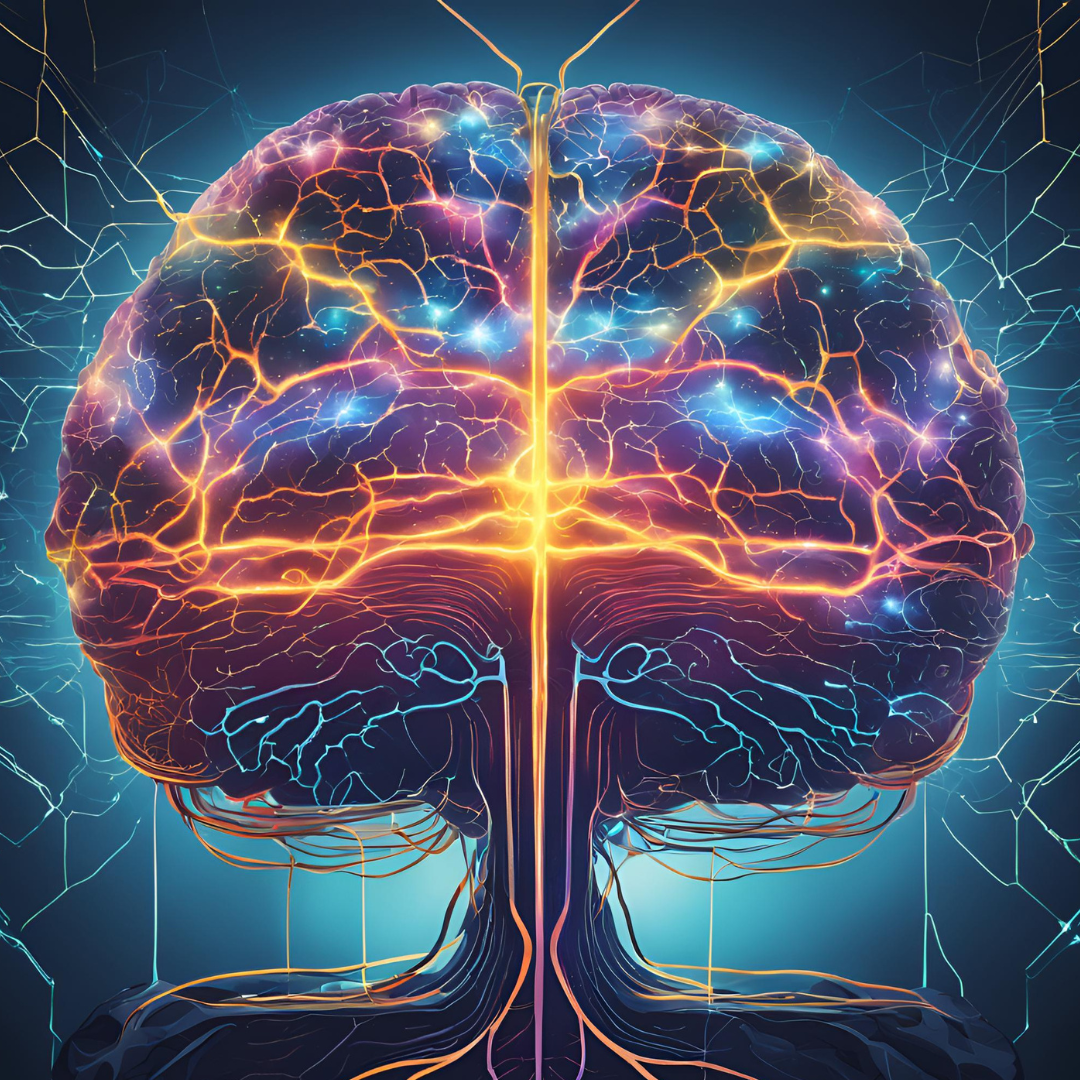
Brain Hack for Success!
We can heal our mind and Life through mind techniques. For example, whenever their is a situation that challenges you or makes you uncomfortable to grow to the next level, the critic will activate in you and make you convinced not to take action. Critics stay in your Audio – like “I am not good enough”, “ I am not ready”, “What if I fail?”, “I am too young for this”… Letting the critic active will only lead to survival and not thriving. Once we resolve the criticism, another personality in us will be active and that is of a “Doer”
In Mahabharata, Arjun who possessed extremely valuable skills, knowledge and talent was destroyed solely due to his criticism, as his skills and talents got blocked. Krishna came to his rescue. In today’s world through Neuro Linguistic Programming (NLP), we lean to handle our skills and criticism and activate our DOER more and get our desired results.
Using Neuro-Linguistic Programming (NLP) people can organise their thinking, feeling, language and behaviour to produce the results they do. By practising NLP methodology one can achieve outstanding performance and become a genius and leader in their field. Through it we can help people have new experiences in life by changing their mental maps which are formed through filtering and perceiving information absorbed through our five senses from the world around us.

Neuro: A study about how you receive data through your nervous system and neurology and how you process it in your brain to create mental models and patterns.
Linguistic – Language: We influence people daily to create an output through communication.
Programming – Mental Patterns: The behavioural response that occurs as a result of neurological filtering processes and the subsequent linguistic map.

Visual Audio Kinesthetic (VAK)
There are four types of personalities and it decides how you process the data. NLP divides personalities in four types :
- Visual
- Auditory
- Kinesthetic
- Audio-Digital
Visual people always give preference to judgment through people’s skin colour, looks and clothes.
Audio people will give more priority to the audio instead of visuals. They start judging you from the moment you start speaking.
Kinesthetic people lack emotions. They can detect the vibes and energy of others. Their every decision comes through feelings. If they get the feeling they do it.
Audio Digital people are highly logical and analytical and always look for a reason.
Understanding these above personalities helps how people perceive and communicate. Communication consists of three elements:
- Linguistic: the words the speaker uses
- Tonal: tone, volume
- Physiological: Facial expressions, gestures, postures.
RAPPORT


In NLP, rapport is a state of understanding and connection between people. It’s a feeling of trust and responsiveness that allows for effective communication by matching unconscious body language and gestures and putting the client at ease.
It is through matching or mirroring the words they use to describe their experiences. By using similar words, we can match the feelings they may be experiencing and can appeal to their deeper level of communication, commonly referred to as the unconscious level.
Rapport is established through the Practitioner matching and mirroring the client
Matching – Feedback to the client given using the same body part. Client crosses right leg over left, practitioner matches by crossing his right leg over his left leg.
Mirroring – Feedback to the client as a mirror. Client crosses right leg over left, practitioner crosses left leg over right leg.
Cross-over matching: using a different part of the body to match. The client crosses his right leg over left, practitioner crosses his right arm over left.
Micro muscle mirroring: The client lifts their arms, and the practitioner moves micro muscles in his arm. This is very effective
Benefits of Micro Muscle Mirroring:
- Increased Empathy and Understanding
- Build Rapport,Trust and break the Ice
- Positive influence on Client
- Effective Communication
- Improved Persuasions and Connection
- Professional application in sales and customer services, leadership roles
STATES
The most important topic of NLP is the State. Without it, NLP is unfulfilled and every human must know how to handle their state.
There are two kinds of States
- Positive or Resourceful State: Happiness, Joy, Confidence, Clarity, Certainty, Good Health, Love.
- Negative or Unresourceful State: Stuck state, unresolved issues, bad memories, bullying, grief, accident, phobia, guilt, hurt
- Benefits of Understanding States in NLP
- Improved communication:
By recognizing and responding to the emotional state of others, you can tailor your communication style to build rapport and effectively convey your message. - Increased confidence:
When you are aware of your state and can deliberately shift to a more positive and confident state, you can perform better in challenging situations. - Building rapport:
Aligning your state with the other person’s state helps create a sense of connection and trust, facilitating better interactions. - Enhanced learning:
By identifying the optimal state for learning and actively inducing it, individuals can absorb information more effectively and accelerate their learning process. - Influencing others:
Understanding and mirroring someone’s state can enable you to subtly influence their thinking and behaviour.- Stress management:
NLP techniques allow you to recognize and shift away from negative states like stress and anxiety, promoting emotional regulation. - Self-awareness:
By paying attention to your internal state, you gain greater self-awareness and can identify patterns that may be hindering your progress. - FILTERS
The way you see things has a profound effect on how you feel and react. They come from all the beliefs and underlying assumptions that you hold in your mind from your education, spiritual or religious training, the community you were raised in, your social status in that community, your education and teachers, your economic prosperity or poverty, your family and friends, fashions and others opinions, TV and advertising, and even from world events of your time in histories like the depression or the Vietnam War.
All of the events, beliefs, reactions, and learnings, are like a tapestry woven together making you who you are today. And then you unconsciously and from your habits, perceive your world through this unique and rich lens of installed beliefs and assumptions.
So, the first step is to carefully examine your perceptual filtering process for what you perceive and how you react to it.
You can call this the filtering mindset.
What are the benefits? You’ll see and hear things that normally escape your attention – and which may explain things that have had you wondering about so-and-so. You also experience a real sense of rapport with the person you modelled. This can be useful when dealing with children, in meetings, in a negotiation. You’re also starting to learn the fundamental NLP skills of matching and pacing and “second position.
ANCHORING
Anchoring in NLP can be beneficial to enhance confidence and regulate emotions
Anchoring refers to the process of capturing a specific state with a specific trigger. In NLP, practitioners use anchors to capture resource states either from a client’s personal history or present state with the intent of linking them to present and future context where the resources would be needed.
Steps of Anchoring:
- Have the person fully access a State
- Provide a specific stimulus as the state peaks.
- Break the State
- Fire anchor to test.
Benefits of Anchoring at Personal and Professional Levels:
1. Emotional Regulation
Individuals regulate emotions effectively.
2. Performance Enhancement
It helps clients to access a resourceful state and enhance their performance in various areas of life
3. Overcoming Limiting Beliefs
It helps to over negative thought patterns and limiting beliefs.
4. Stress Reduction
It is a powerful to manage stress.
- NLP is about experience – knowing the world and everybody in it, doing what you do, and making your existence with its levels and profundities. With the NLP surely one can learn how to see, hear, and feel more of the world, get to know oneself better and understand others better.
https://www.landsiedel.com/en/nlp/what-is-nlp.html
https://v-a-k-ad-testing.firebaseapp.com/en/index.html
https://excellenceassured.com/nlp-training/nlp-resources/mirroring
Post a comment:
You must be logged in to post a comment.