

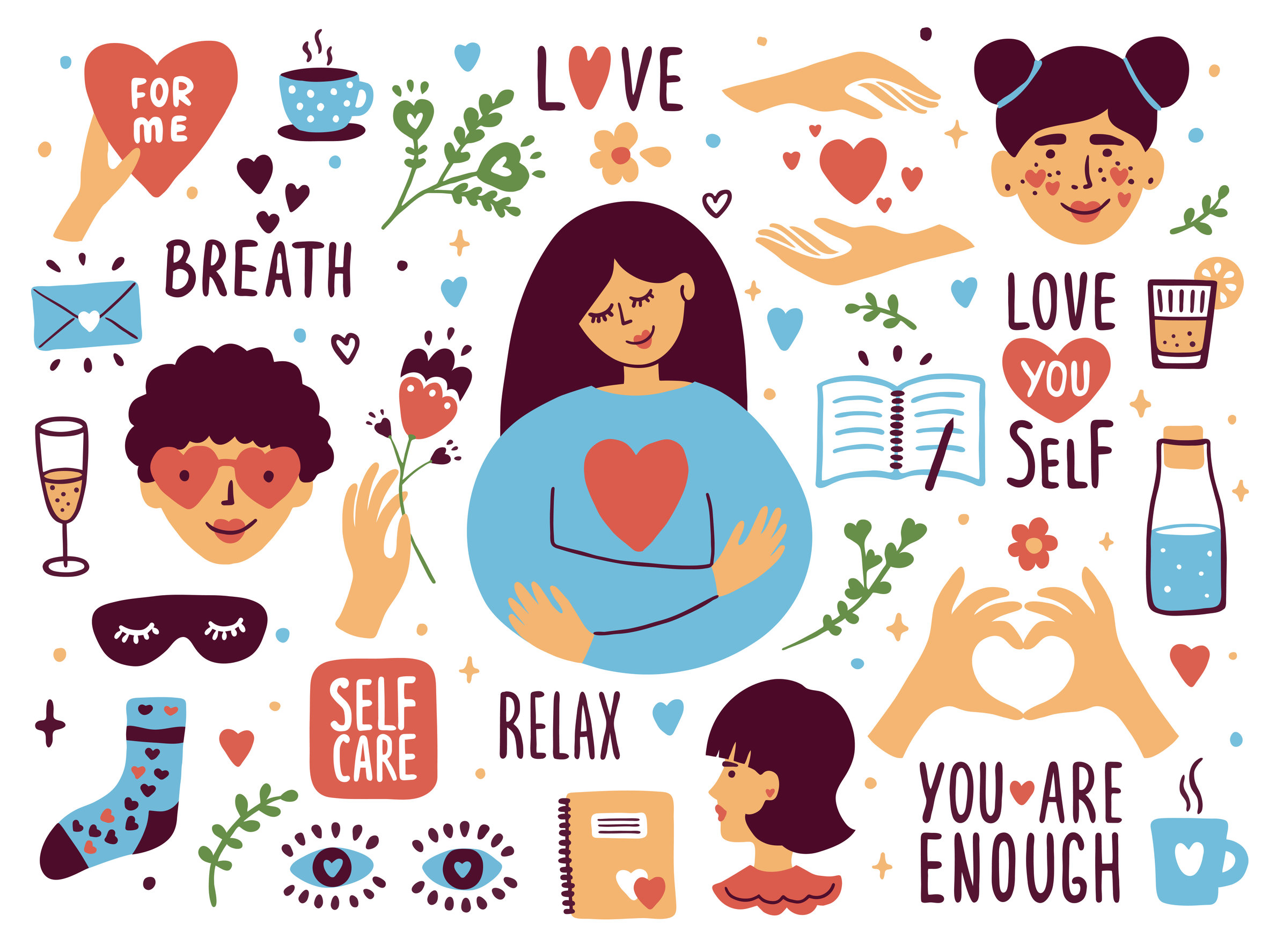
Self-Care Isn’t Selfish: 7 Ways to Better You!

Work, relationships, disputes, sorrow and loss, tests and examinations, health, depression, anxiety, money, and so forth are all sources of stress in today’s world. Adopting unhealthy coping mechanisms increases stress and invites illness. Conversely, adopting appropriate coping mechanisms can help us decompress, improve our lives, and stay fit and healthy.
The most important survival skill for handling our stress bucket is self-care. Self-care is everything we do daily to lower stress and preserve or improve our physical and mental health. Self-care is everything that a person does for themselves to feel better and take care of themselves.
The following are some facets of self-care that support us in living a more balanced daily life:

- Sleep
- Nutrition and Exercise
- Hobbies or Interest
- Boundaries
- Gratitude
- Social Interaction
Sleep has a vital role in recharging our bodies and minds, boosting our energy levels and improving our ability to focus and carry out daily duties. Lack of sleep can hurt our health.
There are strong links and a close relationship between sleep and mental health. Mental anguish is more common when people don’t get enough sleep. A restful night’s sleep promotes emotional and cognitive fortitude. A healthy adult should get seven to nine hours of sleep per night, according to recommendations.


We may get regular, restful sleep by incorporating “Sleep Hygiene” into our everyday practice. It entails putting electronics (TVs, laptops, and smartphones) away or not using them just before bed, keeping the bedroom peaceful, dark, and at a suitable temperature, and going to bed and waking up at the same time every day (consistency). Additionally, eating supper two hours before bed, reading a book before bed, drinking water or decaffeinated beverages at night, practising meditation, and engaging in grounding exercises can all help you sleep better, feel refreshed the next day, and be more productive.
Deep breathing, gradual muscle relaxation, meditation, and visualisation are some sleep relaxation strategies that can improve the quality of your sleep.
Nutrition and Exercise


Exercise causes the brain to release more “feel good” chemicals, such as endorphins, serotonin, norepinephrine, and dopamine, which make us feel more capable, self-assured, resilient, and less nervous. In summary, exercise causes our brain to secretly produce more feel-good hormones and less stress chemicals, which improve our mood and hearing quality.
Researchers from the University of British Columbia (UBC) in Canada investigated how exercise could enhance one’s perception of one’s physique. The study’s specific goal was to find out how women’s perceptions of their bodies were affected by a single 30-minute workout. It contrasted two female groupings. Compared to women who did not exercise, those who did had a better body image. Immediately following the exercise, the impact persisted for at least twenty minutes.
Given that the benefits of exercise are instantaneous, this research serves as a great reminder that getting moving is one way to feel better.
A strong basis for promoting mental well-being and self-esteem is a proper diet. Lack of proper nutrition can have an impact on the body and mind, influencing depression, anxiety, cognition, and decision-making.


Eating well-balanced meals is directly linked to mental health, according to a developing field of study called nutritional psychiatry. Eating a healthy, balanced diet improves mental health, confidence, mood, and self-esteem.
The goal of balanced eating habits is to prioritise health above weight!
- The desire to feed the body and mind with nutritious foods for improved physical and mental health as well as improved performance should be the driving force behind eating healthily.
- Prioritise balance over remuneration. Meal skipping is unacceptable. It causes anxiety and irritation and lowers blood sugar levels.
- Steer clear of fad or restricted diets.
- Keep meals and other activities apart. Take a seat, take your time, eat consciously, and pay attention to your body’s cues.
- Maintaining proper hydration is crucial for the body’s physiological processes, such as detoxification and healing.
- Steer clear of caffeinated drinks as they might raise heart rates and cause anxiety.
Boundaries

Boundaries are the restrictions, guidelines, or borders we establish for our comfort. It’s the fictitious boundary that divides you from other people. They are a collection of mental and physical rules designed to keep us safe in social situations and interpersonal relationships.
Establishing appropriate boundaries prevents people from taking advantage of or manipulating you and helps you communicate your needs and prosper. Everyone has limits, and knowing them will make it easier to be assertive, guard against abuse, and build lasting relationships.
Material Boundaries |  |
Time Boundaries |  |
Verbal Boundaries |  |
Emotional Boundaries |  |
Physical Boundaries |  |

Boundary circles assist us in determining the nature of our relationships with those we know. Those in our inner circle are people we are close to and with whom we discuss private or sensitive information. People in the middle circle are those you feel comfortable and like spending time with, but they won’t divulge personal information. Finally, acquaintances—people you spend little time with—would make up the outer circle.
Socializing

- Benefits of Socialising: Maintaining relationships with friends and family enhances quality of life.
- Increases the synthesis of a hormone that helps people deal with stress and reduce anxiety.
- Encourages a feeling of security, safety, and belonging.
- It keeps the brain active and memory sharp, and it enhances cognitive wellness.
- Finally, social connections help us stay young as we become older.

Making a profession out of what you like is known as “working on your passion.” It may also refer to finding purpose in your job, being enthusiastic about it, and maintaining daily attention.

Being thankful is the key to living a happy life because, without it, we will never be content with what we have since we would constantly wish for more or something different.
Self Care Challenge

Citation
https://www.info4mystery.com/2018/05/requirements-of-socialization.html
@printablewithlisa
https://vocal.media/longevity/self-care-practices-nurturing-mental-and-emotional-well-being

Post a comment:
You must be logged in to post a comment.